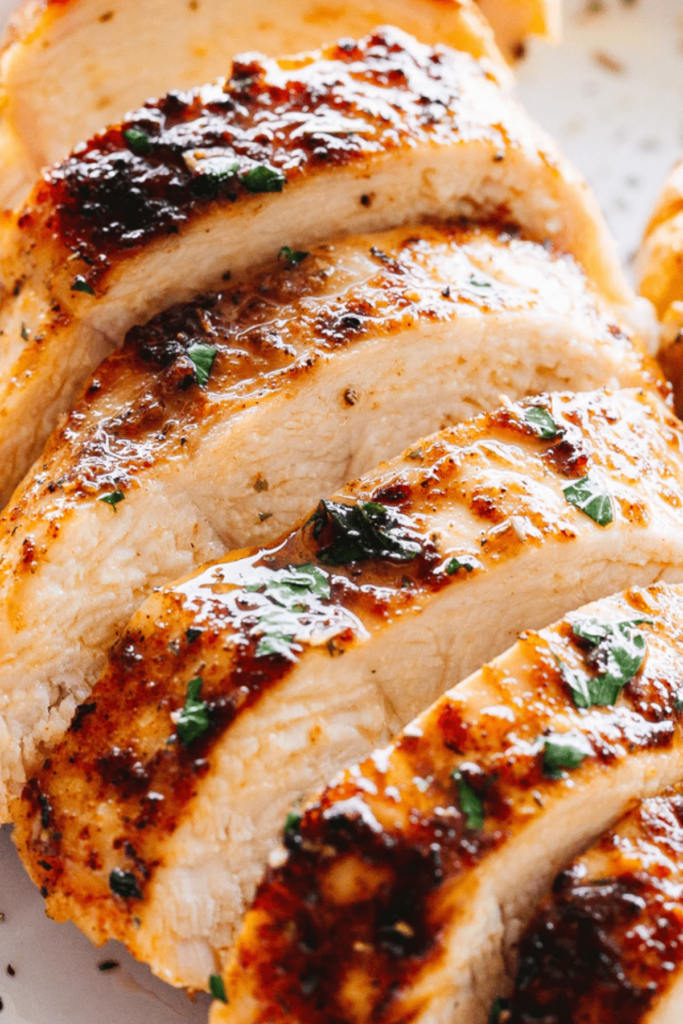
Why Is My Chicken Rubbery?

Last time, in Why Is My Chicken Always Dry?, we talked about chicken that turns to sawdust on the plate. I promised we’d come back for the other complaint I hear just as often: “It’s not dry, exactly… it’s just rubbery.” Bouncy. A little gummy. The kind of bite that makes you wonder if you’re eating chicken or a chew toy.

Good news: this is a completely different failure mode from dry chicken, which means it has a completely different fix. Let’s get into it.

Dry vs. Rubbery: Not the Same Crime

Dry chicken is a moisture problem — the proteins tightened up and wrung the water out, like squeezing a sponge. Rubbery chicken is a texture problem. The moisture might still be in there; the muscle fibers themselves have just gone stiff and tight, so every bite fights back. Same suspect (heat, mostly), different crime scene.

The Usual Suspects

1. You cooked it too long – even at a “safe” temperature. This is the big one, and it trips people up because it feels counterintuitive. Chicken doesn’t just dry out with extra time on the heat; the muscle fibers keep contracting and squeezing tighter the longer they’re exposed, even if the internal temp isn’t climbing much anymore. That’s what turns tender protein into something you have to work at. The fix is the same one I harped on in the dry chicken post: pull it at temperature, not on a timer. 165°F for breasts, then stop – don’t give it “a few extra minutes just to be safe.”

2. Poaching, boiling, or steaming at too high a heat. Wet cooking methods are notorious for rubbery chicken because it’s easy to let the liquid roar at a boil instead of a gentle simmer. A hard boil agitates and toughens the protein fast. If you’re poaching chicken for salads or soup, keep the liquid at a bare simmer – small bubbles, not a rolling boil – and pull the chicken the moment it hits temperature.

3. Marinated too long in something acidic. Acid (citrus, vinegar, yogurt, wine) is great for flavor and can tenderize in small doses, but leave chicken in a strongly acidic marinade too long and it does the opposite: it denatures the surface proteins so aggressively that they turn tight and mealy, almost like it’s been “cooked” by the acid before it ever hits the pan. Keep acidic marinades to 30 minutes–2 hours for boneless breasts, not overnight.

4. It might not be you at all – say hello to “woody breast.” This one surprises people. Modern fast-growing broiler chickens can develop a muscle condition called woody breast, where the fibers in the breast are abnormally stiff and hardened before it ever reaches your kitchen. It’s harmless to eat, but no amount of technique will fix meat that was already tough at the grocery store. Telltale signs are a noticeably firm, almost ridged fillet with pale, raised bands running through it. If you keep getting rubbery results despite doing everything right, it’s worth inspecting the raw breast next time – or switching to thighs, which are far more forgiving and rarely affected.

How to Avoid the Chew-Toy Outcome

  • Cook to temperature, not time – and stop the second you hit it. Carryover cooking will finish the job.
  • For poaching or boiling, keep the liquid at a gentle simmer, never a hard boil.
  • Limit acidic marinades to a couple of hours, tops.
  • Inspect raw breasts for firmness or visible striping before you cook them – sometimes the problem walked in the door with the chicken.
  • When in doubt, reach for thighs. They’re more resistant to both the dry-out problem and the rubber-band problem.

The Bottom Line

Dry chicken and rubbery chicken look like the same complaint from the dinner table, but they’re solved differently. Dry is about moisture leaving the meat. Rubbery is about the muscle fibers seizing up — sometimes from how you cooked it, and sometimes because the bird came that way. Nail the temperature, go easy on the acid, keep your simmer gentle, and you’ll knock out both problems for good.

Got a chicken mystery I haven’t covered yet? Let me know – Kitchen Forensics is far from closed.

Why Is My Chicken Always Dry?

You followed the recipe.

You seasoned the chicken. You cooked it exactly the amount of time it said. Maybe you even spent extra money on the “good” chicken.

And somehow it still came out dry, stringy, chewy, or tasting like sawdust.

If that sounds familiar, you are not a bad cook.

This is one of the most common kitchen problems people run into, and most recipes do a terrible job explaining why it happens. They tell you what temperature to cook chicken to, but they rarely explain what is actually happening inside the meat while it cooks.

So let’s fix that.

The Real Reason Chicken Turns Dry

Chicken gets dry because the proteins inside the meat tighten up and squeeze moisture out as they cook.

Think of it like wringing out a sponge.

The hotter chicken gets, the tighter those proteins squeeze. Once too much moisture is pushed out, there is no putting it back. That is why overcooked chicken always feels dry no matter how much sauce you pour on top afterward.

The frustrating part is that chicken can go from juicy to dry surprisingly fast, especially chicken breast.

Here are the biggest reasons it happens.


1. You Are Cooking by Time Instead of Temperature

This is the biggest mistake by far.

Recipes that say things like “cook for 6 minutes per side” are giving you an estimate, not a guarantee. Chicken thickness matters. Pan temperature matters. Your stove matters.

Time alone cannot tell you when chicken is done.

Temperature can.

Chicken breast is fully cooked at 165°F, but here is the important part most people miss: you usually want to pull it slightly before that.

Why?

Because chicken keeps cooking for a few minutes after you remove it from the heat. That leftover heat continues moving inward.

If you wait until the chicken hits 165°F in the pan, chances are it will climb even higher while resting, and that is where dryness starts creeping in.

A simple instant-read thermometer changes everything.


2. Chicken Breast Is Naturally Lean

Chicken breast has very little fat compared to thighs.

Fat adds protection against drying out. Breast meat does not have much of that protection, so it has a smaller margin for error.

That is why chicken thighs are much more forgiving. You can overcook them a little and they still stay reasonably juicy. Chicken breast does not give you that luxury.

This is not your fault. It is just the nature of the cut.

If you constantly struggle with dry chicken, switching to thighs for certain recipes is not cheating. Restaurants do it all the time because thighs are more reliable and flavorful.


3. Your Heat Is Too High

A screaming hot pan sounds impressive, but it often dries chicken out before the inside finishes cooking properly.

People do this because they want good browning, which is understandable. The problem is that high heat can overcook the outer layers long before the center catches up.

Then you end up with dry meat outside and barely acceptable meat inside.

Medium to medium-high heat is usually the sweet spot for chicken breast.

You want enough heat to develop color, but not so much that the outside turns into leather before the inside is done.


4. You Are Not Letting It Rest

Cutting into chicken immediately after cooking releases the juices straight onto the plate instead of keeping them inside the meat.

You have probably seen this happen.

You slice into it and suddenly there is a puddle everywhere.

That moisture was supposed to stay in the chicken.

Resting gives the juices time to redistribute and settle back into the meat. Even five minutes makes a noticeable difference.

It feels small, but it matters.


Quick Diagnosis

  • If your chicken is dry all the way through, it was probably overcooked
  • If the outside is dry but the center is okay, your heat was likely too high
  • If juice floods onto the plate when slicing, it needed more resting time
  • If chicken seems dry even when fully cooked, you may simply prefer thighs over breast meat
  • If every batch comes out differently, you need to stop cooking by time alone

The One Rule to Remember

Perfect chicken is not about cooking it longer. It is about stopping at the right moment.

That is the entire game.


Grab the free Kitchen Forensics Fix Sheet for 12 more common cooking mistakes and the simple fixes that actually work.

And if your chicken is not dry but somehow still comes out weirdly chewy or rubbery, that is a completely different problem altogether.

We will tackle that next.